Welcome back to our Artist Spotlight series, where we chat with creators in the game dev space about their work, their process, and what they have learned along the way.
This time we are talking to Christoph Kühl, the solo developer behind Senescent Leaf. He is building Life Altered, a roguelike deckbuilder that stores its cards in dice, in the time between a day job and parenting. Along the way he has worked out an asset pipeline that mixes commissioned art, bought packs and centuries-old scientific illustrations.
For anyone who has not seen it yet, how would you describe Life Altered?
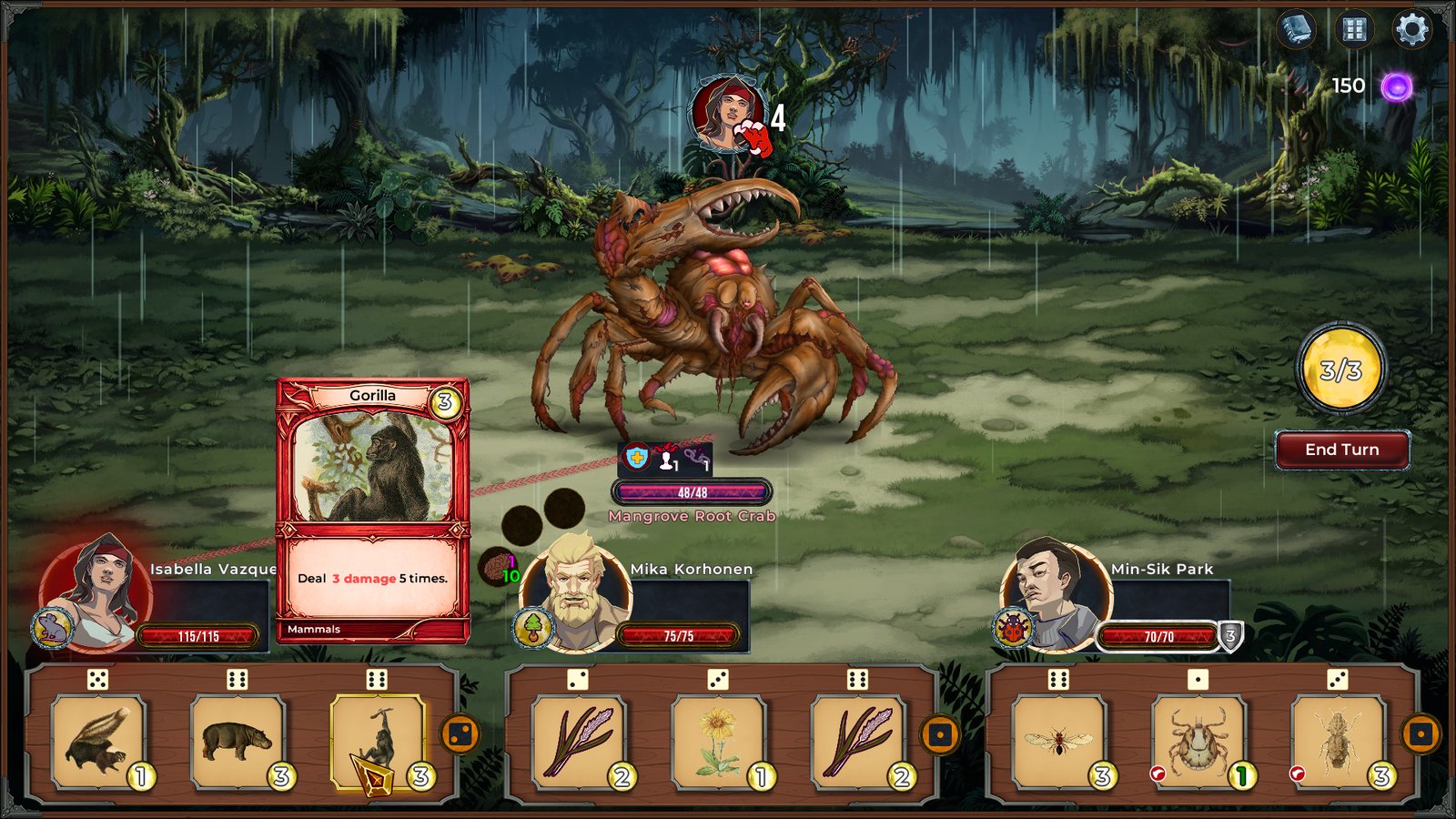
Life Altered is a nature based deckbuilder that blends dice and card gameplay. I'm guessing that both the "nature" and the "dice" part need explaining.
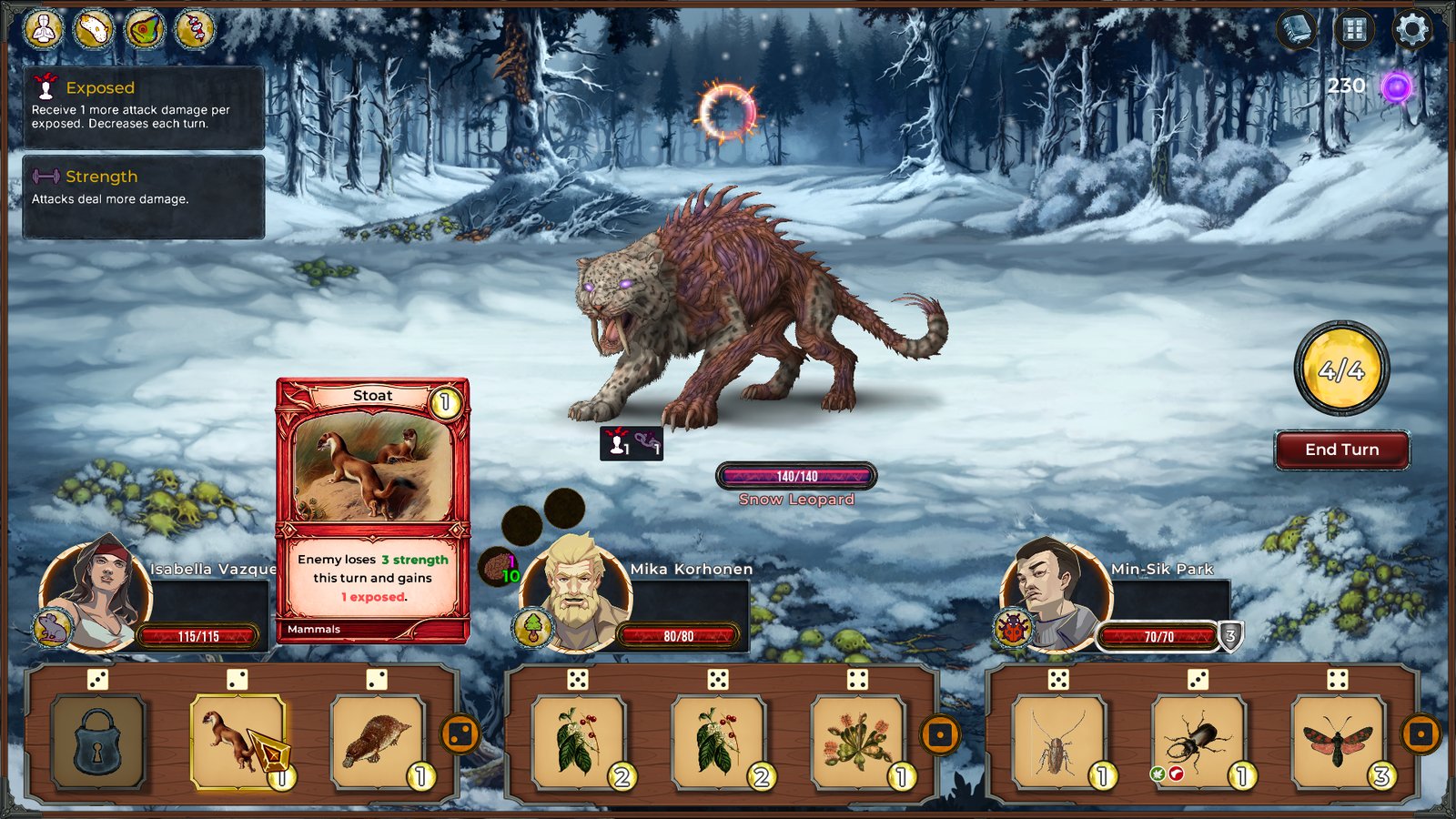
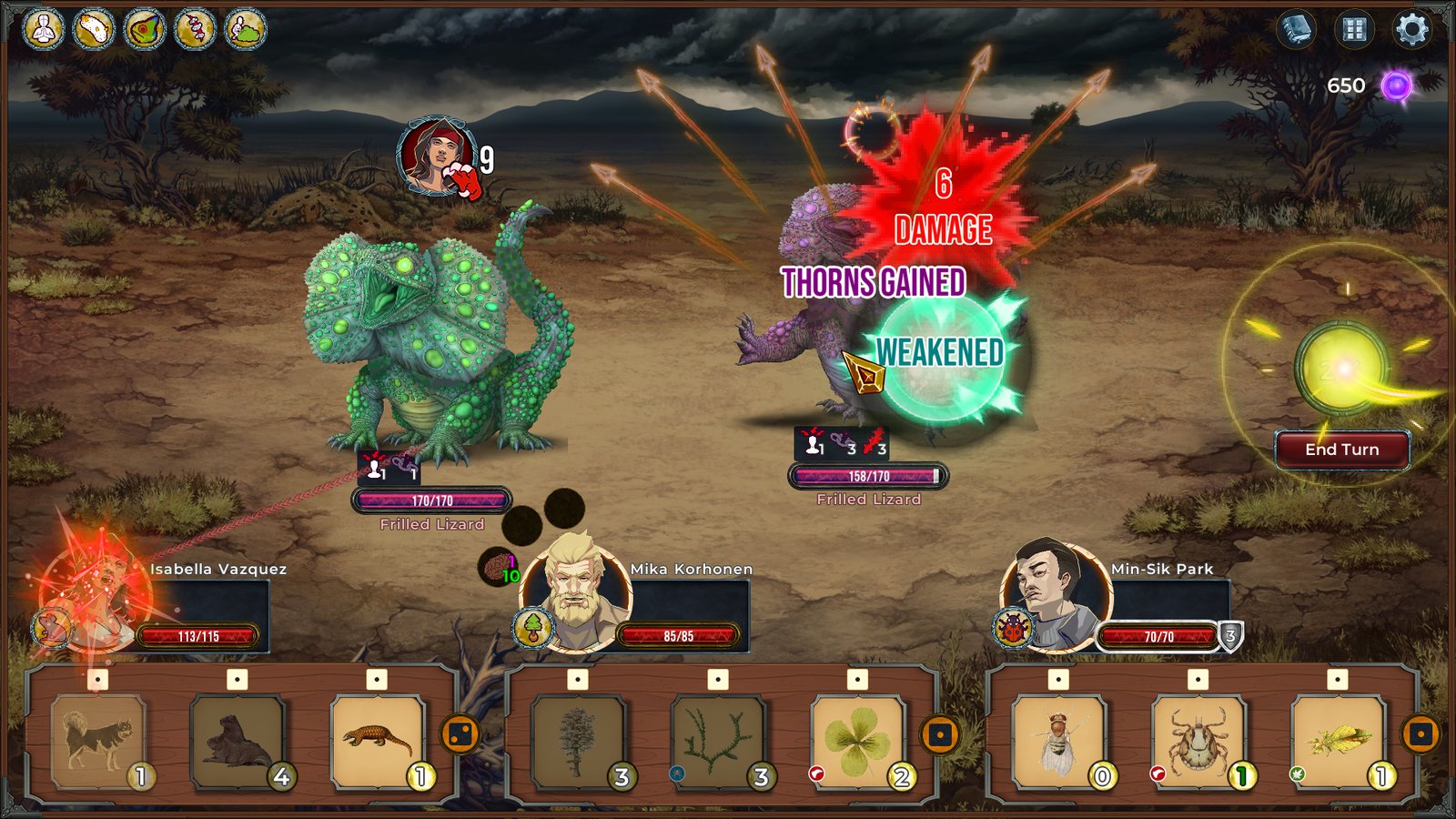
Let's get to the dice first. In any traditional deckbuilder you draw your cards from a deck and throw them on a discard pile after your turn ends. In Life Altered your cards are collected in and played through dice. So if your die lands on honey badger, you get to play the honey badger card. This opens up new gameplay and deck management strategies compared to the classic card-only mechanic.
And nature? Well, the cards are all of Earth's most interesting, weird and dangerous life forms. Bullet ant (inflicts pain), wombat (fights with its butt), ginkgo tree (grants more energy). It's been fun to research and implement all those creatures.
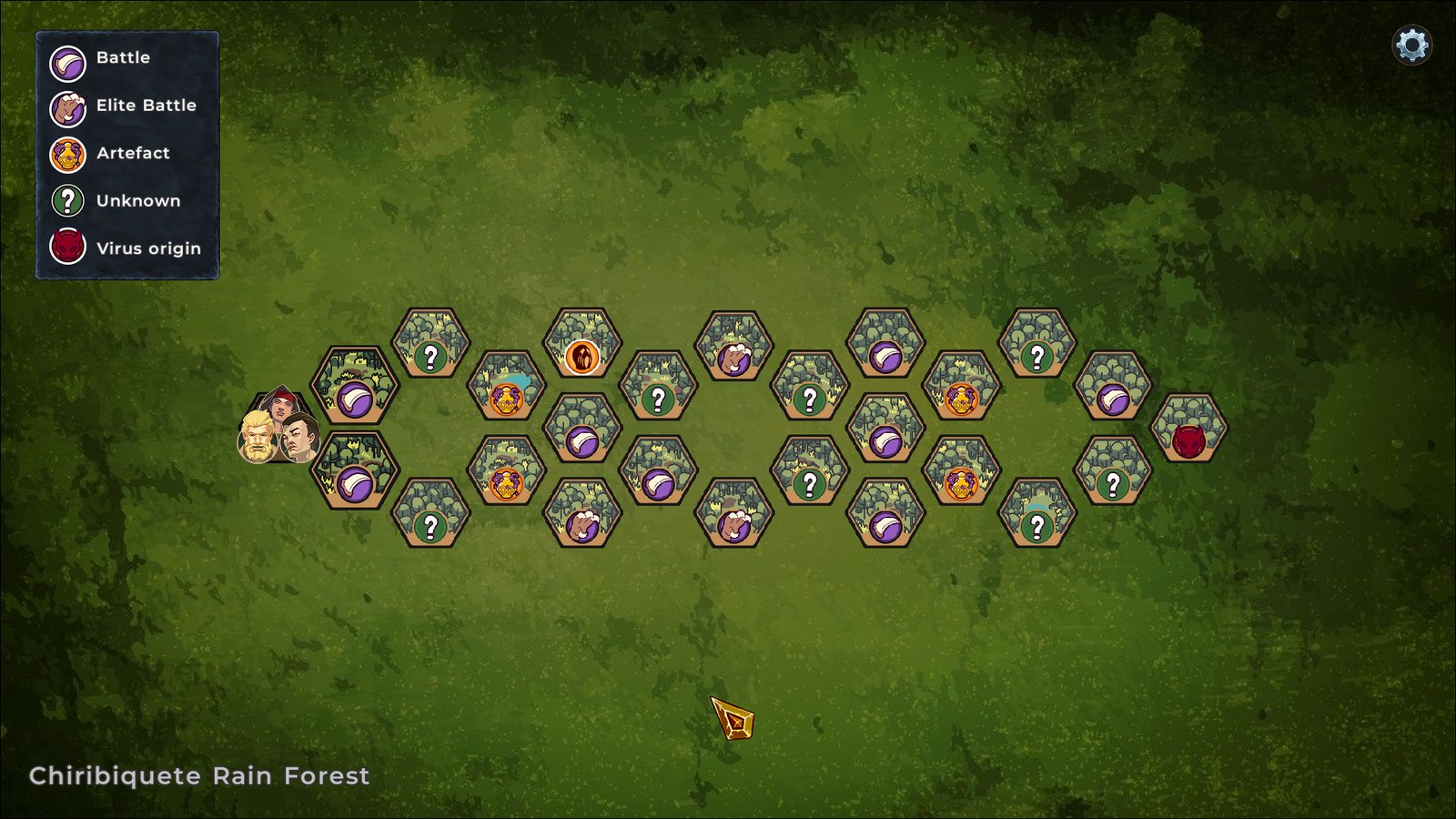
Story-wise it's about an alien virus that mutates all life on Earth except people who are gifted with magic-like animal and plant abilities, who try to fight their way through infected regions to find a cure.
The Life Altered trailer. There is more on Christoph's YouTube channel, including a playthrough by the developer himself.
Who is behind Senescent Leaf, and how did a biologist end up making games?
I love nature and science. It's the reason I studied biology at university. So when the time came to find a setting for my game, I naturally drifted to what I know.
I tried to reflect that in the studio's name. Leaf senescence is one of the first things that fascinated me about plant biology. It describes the process of leaves turning yellow and red in autumn. Being an early touchpoint of science in my life, it marks a beginning for me, but it is also about something ending, a leaf's life, only to be born again come spring. And I do enjoy a good metaphor for beginnings and endings. Being a game dev is a new beginning for me, after all.
Some people view science as separate from art; sometimes they even use the words as antonyms. But I don't see them as mutually exclusive. I have been trying to find a creative outlet pretty much my whole life. I tried writing, film making, drawing, making music, acting: nothing stuck. I have also been a gamer my whole life, but it never seemed like a realistic possibility to make games myself. The programming part scared me off, which turned out to be wrong, of course.
I finally tried the GameMaker engine and with my first game I feel like a fish in water. I love designing gameplay, I love coding it, I love animating the creatures. That is also what makes it alright if the game happens to fail commercially. Even if it never makes money, I'll have loved every minute of making it.
Do you make the assets yourself, work with other artists, or use bought or free packs?
Visual art is one of my limitations. I don't enjoy drawing and so I cannot bring myself to get better at it. So I use (mostly paid) asset packs where it's feasible, and there are great packs for UI, for example. Then I commission artists for anything too specific or important to come from an asset pack. There are no asset packs for mutated bilbies, snow leopards and dung beetles.
Finding an artist you can trust and afford, and whose quality matches your vision, is not easy, and in the age of AI it is more difficult still. I tried a couple of artists on Fiverr before I landed on someone I was happy to work with. Now all the enemies in the game are made by Riko Agustian P. My brief is usually short: "Give me a horribly mutated [insert animal] viewed from the front, in your own style." He delivers the illustrations and later I animate them myself. Fiverr can be shady and dangerous in many ways, but if you find an artist to partner with, it is a great way to handle image rights and payment.
I also found some artists through asset packs that looked good but didn't quite fit my game. I just contact the creator to ask if they work on commission too. That's how I found the Ukrainian studio Moon Tribe, who did my background environments, and Penzilla, who made icons for me.
And lastly, the actual animals and plants on the cards would be too many for me to afford on a commission basis. Luckily, there are wonderful public domain images from old scientific journals of all kinds of life forms. Looking through those archives is very much like digging for gold. When you find something good it's a great feeling.
The dice appear as an unfolded net rather than rolling in 3D. Was that a design choice from the start, or did a technical limit push you there?
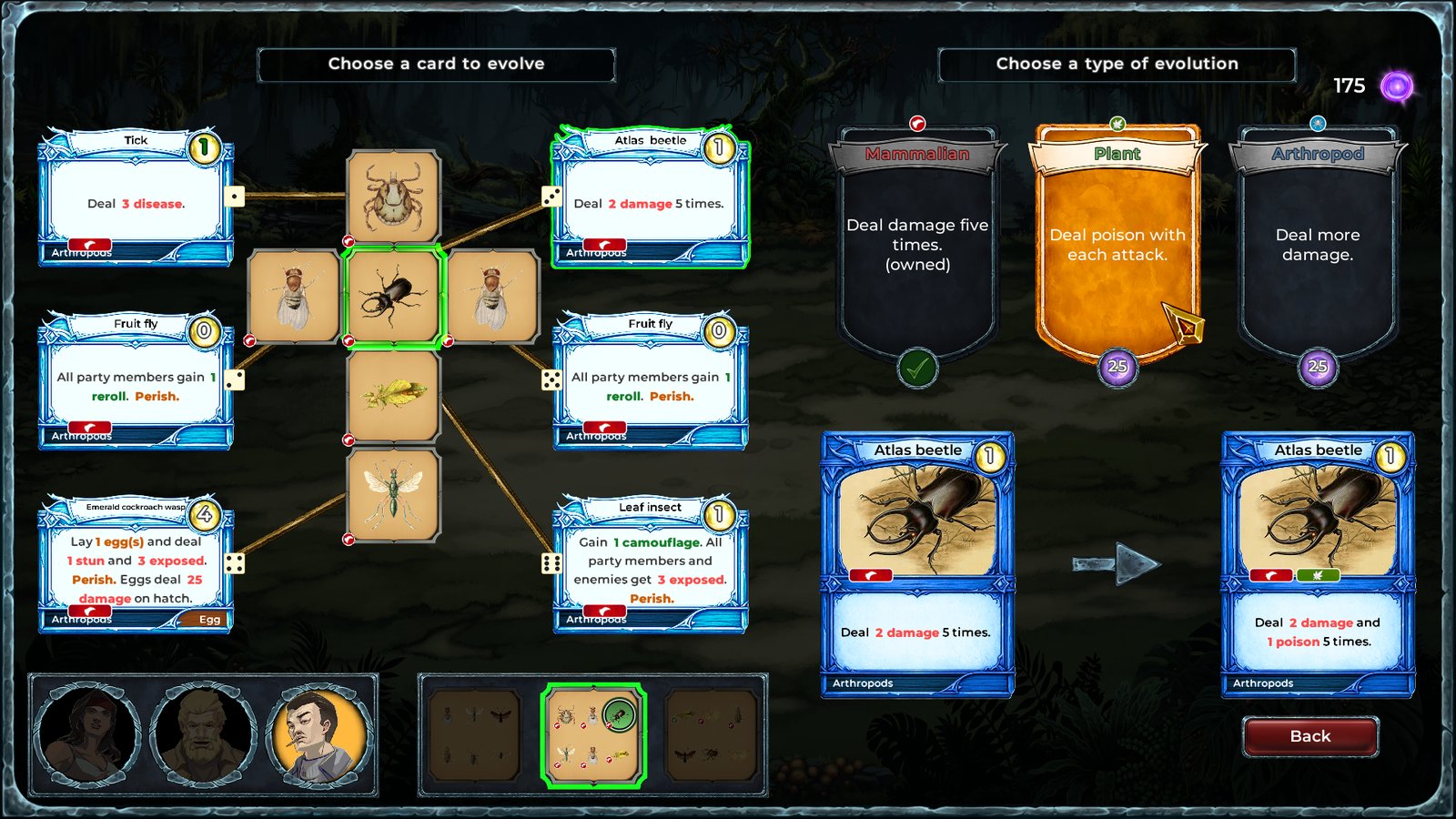
I am actually still not sure I landed on the best way to depict the dice. I might like real 3D dice, but GameMaker is still a 2D-focused engine and it is really difficult to make 3D work. Even if I could figure that out, 3D dice might just look too goofy in an otherwise 2D setting. (It does look weird in Slice & Dice, for example, even though I love that game a lot.) So I spin my 2D dice in place to roll them, and show a foldout layout in the character screens.
Were there other moments where a constraint shaped how the game looks?
Generally, the limits of the UI have played a large role in shaping Life Altered's gameplay. For example, I originally wanted each character to have four dice instead of three. The only reason I didn't do that is that I couldn't fit 12 dice on the screen. Now I think it's for the best, because nine dice is the right number gameplay-wise. But I spent days trying to find a way to fit 12 on the screen.
Honey badgers, bullet ants, mantis shrimp, sequoia trees. How does one creature go from an idea to a finished in-game asset?
I start by researching plants and animals with interesting facts about them, like the tarantula hawk, which paralyses its prey and lays eggs inside it that later hatch and eat their host. I think about how that translates into a good card mechanic (stun the enemy and lay eggs, which hatch after three turns to do X damage) and code it.
For the card art it's a simple matter of looking for a suitable image of the species in the Biodiversity Heritage Library and cutting it to size for the cards and dice in Krita.
With up to three evolutions stacked on a creature, how do you show that visually?
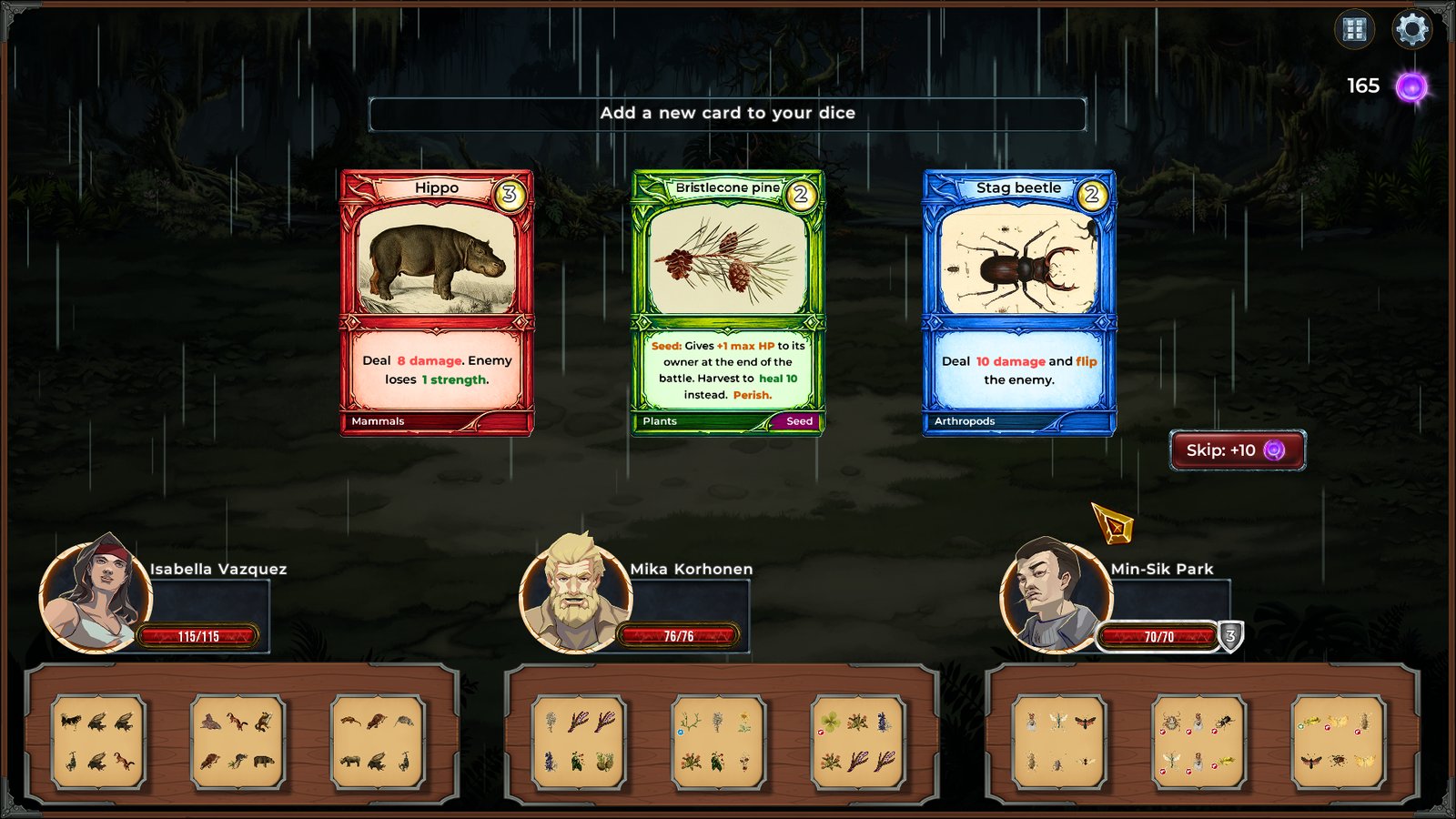
The card is basically three layers on top of each other:
- Bottom layer: the species art
- Middle layer: the card frame, with a hole to show the species art
- Top layer: the evolution markers
I would love to show evolved species as new sprites, but I just can't afford to create the assets, so I am working with pip-style evolution markers.
What tools are in your art and audio pipeline, and how do those files get into the engine?
My main tools are Clip Studio Paint, Krita, Figma, Spine and AssetHoard.
My main artist uses Clip Studio Paint, which is lucky, since I bought a licence for it back when I tried my hand at digital drawing. That lets me check and edit his illustrations in the original source file.
Whenever he sends me a new enemy illustration, I start by separating the body parts I want to animate and exporting them as PNG files, so I can import them into Spine for animation.
Why Spine?
Spine is the most expensive software I have bought, but it's worth it. It is surprisingly easy to use once you have watched one or two tutorials, and I love the results I am getting. The process is basically:
- Import the body parts I cut out.
- Create a mesh for each body part.
- Add bones and bind them to the meshed body parts.
- Move the bones at key frames to create the animations. I mostly need idle, attack, hurt and death animations.
The whole thing takes four to six hours or so per enemy. I can then export the animated illustration as an atlas file, which GameMaker supports natively. The engine lets me control the animations with code.
Krita is open source software that I use as an alternative to Photoshop. I need it to adjust, resize or colour correct assets. Figma has been very useful for creating and adjusting UI elements.
And audio?
I don't really use audio tools, except for Audacity to record some voice-over for promotional materials. I use audio files from asset packs that I import into GameMaker, and adjust their volume in-engine.
AssetHoard has been extremely helpful for finding and previewing audio files to use in my game. I apparently amassed 70,000 audio files through various Humble Bundles. Browsing through them with Windows Explorer would be virtually impossible.
What is one thing about making assets for a game this size that you wish you had known at the start?
I think the main thing I would do differently is put more thought into art direction before buying any assets or commissions and putting them in the game.
I spent a not insignificant amount of money on art that ultimately had no place in the game. The game started out as a pixel art project, for example, before I realised that I could not afford to do the whole game in that style.
I worked on the game for at least a year before I started methodically mocking up screens in Figma. Mock-ups are a quick and cheap way of figuring out which types of assets work well together and how they can be spaced on the screen. I wish that had been my process from the start.
What is left to do before launch, and is there a release window you can share?
There is still lots to do. Mainly three more characters with 40 cards each, ten more enemies, an ascension system and some story beats. I think I can release a demo in early 2027, and I hope to release the full game by the end of 2027.
Follow Life Altered's development, or wishlist it on Steam:
This is part of our Artist Spotlight series. If you are a game asset creator and want to be featured, get in touch.