
AssetHoardpress kit
Descriptions
Copy-paste ready at three lengths. Quote any of these verbatim.
AssetHoard is a local-first desktop asset manager for indie game developers and digital artists. One searchable library for every file type, fully offline.
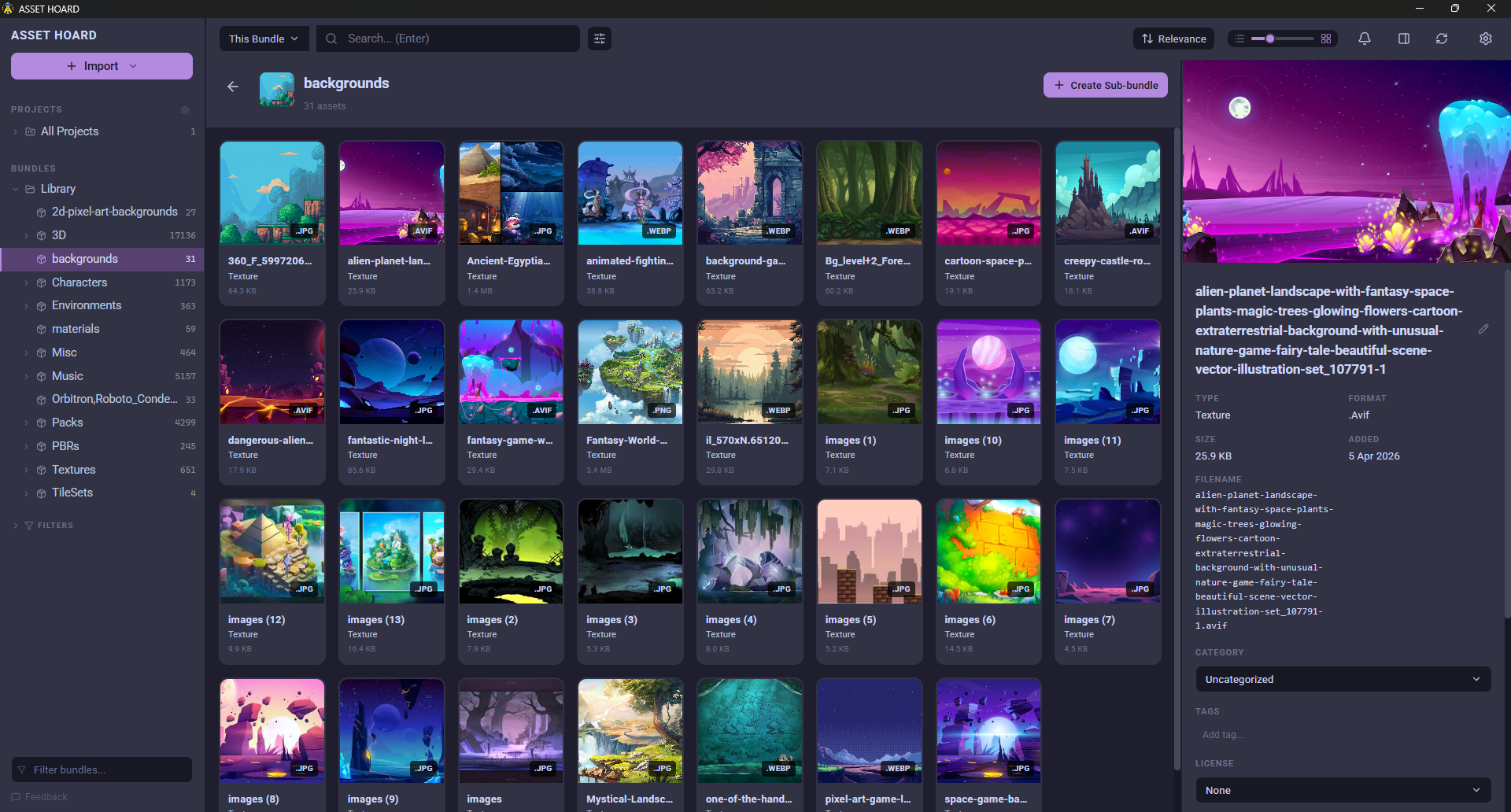
AssetHoard is a desktop asset manager built for the way game developers and digital artists actually work. It indexes more than 80 file types, from 3D models and sprite sheets to audio and engine packages from Unity, Godot, Unreal and GameMaker, into a single searchable library. Everything runs locally: rich previews, semantic search powered by an on-device model, and drag-out straight into Godot, Unity, Unreal or GameMaker. No cloud account, no subscription, nothing leaving your machine. It is a one-time purchase of $29 USD during open beta, rising to $49 at release, with free updates for the major version you buy.
AssetHoard is a local-first desktop application that gives game developers and digital artists one organised, searchable home for their creative files. Built in Rust for Windows, macOS and Linux, it recognises over 80 file types and renders accurate previews for each, including 3D models, sprites, Aseprite animations, audio, Unity packages, Godot scenes, Unreal .uasset packages and GameMaker resources. Its semantic search runs entirely on-device, so creators can find assets by meaning rather than filename with no internet connection and no cloud account. Assets drag straight out of the library into any game engine. AssetHoard began as one developer's fix for their own messy asset folders and is now in open beta, sold as a one-time $29 USD purchase during open beta, rising to $49 at release, with free updates for the major version you buy and no subscription.
Key features
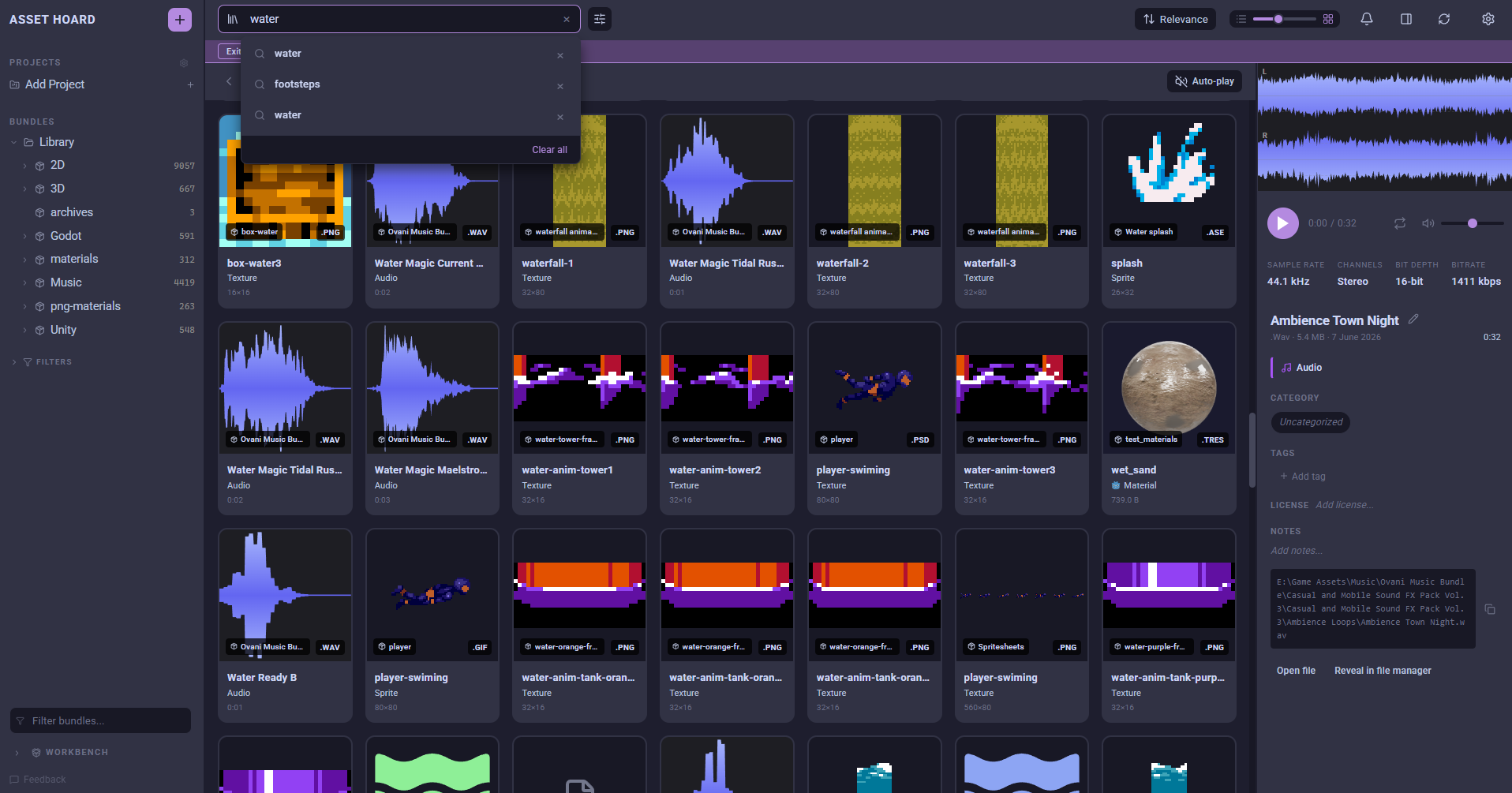
- Offline semantic searchFind assets by meaning, not just filename, using an on-device model. No internet required.
- 80+ file types3D models, sprites, audio, Unity packages, Godot scenes, Unreal .uasset packages, GameMaker resources, Aseprite animations and more.
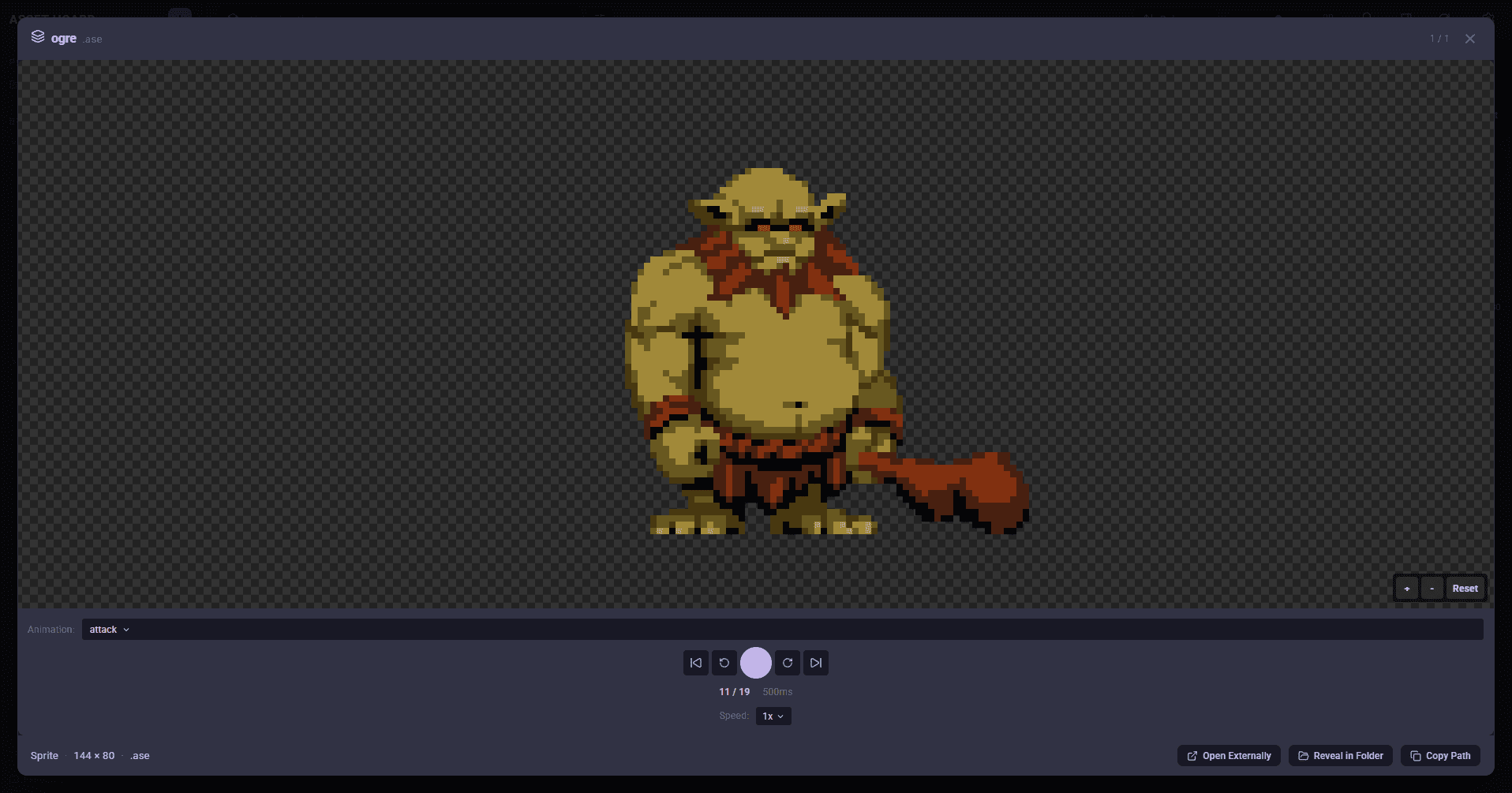
- Rich previewsAccurate, render-ready previews for every supported format. Animation playback, and pan + zoom.
- Drag-out to enginesDrop assets straight from your library into Godot, Unity, Unreal or GameMaker.
- Tags, categories & bundlesOrganise at any scale, from a handful of files to libraries in the hundreds of thousands.
- WorkbenchCollect and stage the assets you need for a project in one place.
Story angles
The narratives worth covering, written so you do not have to dig for them.
A.Private by design
Local-first and fully offline. In a market drifting to cloud-everything and models trained on user work, AssetHoard keeps a creator's entire library, search included, on their own machine.
B.One developer, built in Rust
A solo developer in Melbourne built AssetHoard end to end after getting tired of losing work in a maze of folders. Development, design and community are all run by one person.
C.No subscription, on principle
A one-time $29 purchase during open beta, rising to $49 at release, with free updates for the major version you buy, a deliberate stand against the subscription model that has crept into nearly every creative tool.
D.Made for the engines the big tools ignore
First-class support for Godot, Unity, Unreal and GameMaker workflows that incumbents like Eagle and Connecter do not meaningfully target.
Fact sheet
| Title | AssetHoard |
|---|---|
| Developer | Mark Gandolfo · Melbourne AU |
| Status | Open beta |
| Platforms | Windows, macOS, Linux |
| Price | $29 USD during open beta · $49 at release · one-time purchase · free updates within the major version · no subscription |
| Built with | Rust |
| Category | Asset manager / creative workflow tool |
| Website | assethoard.com |
| Open beta since | March 2026 |
About the developer
AssetHoard is built by Mark Gandolfo, a solo developer based in Melbourne, Australia. He started the project to solve his own asset-organisation problem and has grown it from a closed beta into open beta, handling development, design and community himself.
Logos & media
Vector logos, ready to use. Click any tile to download the SVG.






Screenshots and video. Drop your real files into these slots. High-res where possible.
Feature clips. Short, silent loops, ready to embed or download. Click any to play.
Brand
"AssetHoard" is always written as one word.